Tuesday, 1 June 2021

May the Force be with you

Goodbye May.  May's been good to me.

Not only did I reach my sales target for the year, but doubled it.  Four sales in a month.  Not sure I've done that before.  Not sure I ever will.

So, in addition to 'The Pizza Bug' going to Cryosieum Press and Frost Zone's Handmade Horror,

  • Martian Magazine will be running 'General Katutian Surveys her Triumph' (something of a cheat, I'll admit - not only is this a drabble, it was originally sold to Martian in 2018, accepted, returned when the magazine went into hibernation, and has now been re-accepted.  But I'm including it.  See if I care.)
  • Urhi Publishing have taken 'Roadkill' for their Needle Drops... anthology series.  There's talk of producing theme music for some of the stories.  I'm intrigued.  And...
  • 'The Smartest Guy in the Room' will be in Mystery Weekly Magazine's Die Laughing anthology.
Two horror stories, plus one criminally funny one (allegedly), and the only sci-fi is a hundred words long.  So should I still think of myself as a sci-fi writer?  Why not get your hands on these and judge for yourself:

#

Click on the images or search for these on Amazon.
You're here, so surely you know how to do that?


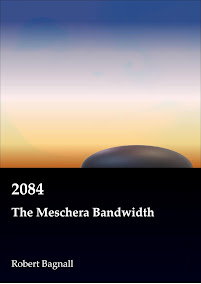
2084 - The Meschera Bandwidth

2084. The world remains at war.

In the Eurasian desert, twenty-year old Adnan emerges from a coma with memories of a strictly ordered city of steel and glass, and a woman he loved.

The city is the Dome, and the woman... is Adnan's secret to keep.

Adnan learns what the Dome is, and what his role really was within it. He learns why everybody fears the Sickness more than the troopers. And he learns why he is the only one who can stop the war.

Persuaded to re-enter the Dome to implant a virus that will bring the war machine to its knees, the resistance think that Adnan is returning to free the many - but really he wants to free the one.

24 0s & a 2

Twenty-four slipstream stories.  Frequently absurd, often minimifidian, occasionally heroic.
Tuesday, 18 May 2021

Why story structure says we're all doomed

For a birthday present last week, I decided to join the Green Party.

Being a previous Liberal Democrat and lifelong hornet you'll see I side with the plucky underdog, the rank outsider (did I hear 'loser' from someone at the back?).  Those two win some, lose some.  But the Greens are different. They're destined to lose.

Odd words from a believer and a supporter, I know.  Let me explain.

There's a cartoonish simplicity to British politics reproduced, I suspect, wherever humans are involved.  The Labour movement grew up to fight for the flat-cap wearing loom weavers against the tweedy factory owners rolling around in gold sovereigns like pigs in shit.  Then the workers won the right not to have their hands cut off by moving machinery after eighteen-hour shifts without a break for a cup of char and a wad, at which point the Tories said now you've all got two half-farthings to rub together, look at how those socialists are going to take them from you.  There are the feckless and the foreigners to watch out for, and thievery everywhere, and if you really want urchins educated it's gonna cost you loads.  Plus, you'd be better off with us in case the French invade, a fear which forever lurks at the very core of the British psyche.

The point is that we are hard-wired to think in terms of sides.  There are us and the people out to get us, and we vote for the people who are most like us and most out to get the people out to get us.

I look forward to being cited in PhD theses.

And that simplistic approach to politics is, I think, just another facet of how we tell stories because story-telling reflects something at the very heart of what it is to be human.  And our stories, from our first nursery rhymes onwards, have heroes and villains, protagonists and antagonists.  We pick sides.  And the key point here is... sides are different.  Otherwise, they wouldn't be sides.

It's such an obvious rule of story structure that almost everything written about it takes it as read.  Google "antagonist and protagonist" and you get advice like:

In all of them the implied, but never stated, parameter is that they're necessarily different.  Think about it.  There are no decent stories where antagonist and protagonist are the same character.  Sure, there's Doctor Jekyll and Mister Hyde and all its kith and kin, but these are always two characters in the same body.  We have no narratives where the hero and villain are the same person at the same time, where to side with one is to side with the other.  It doesn't make sense.  It's squaring a mental circle, an inconceivable impossibility.

And the trouble with climate change is that we're doing it to ourselves.  We are our own antagonists.  We cannot win without defeating ourselves.  Get your heads around that.  If we think we can reverse climate change without stopping the use of fossil fuels, we can'tAnd we just can't stop using fossil fuelsWe just can't, not without sacrificing too much.  We are not the solution.  We are the problem.  And if we think with a bit of recycling and a Tesla we'll get the world back on track, we're as delusional as Leonardo di Caprio in Shutter Island (oops, post-hoc spoiler alert!).

It's hardly surprising that everybody from our leaders downwards has created a narrative where things aren't as bad as they seem.  The truth would leave you looking like Munch's Scream.  Even the Green movement tries to put it into chewable if unpalatable chunks.  Put simply, the scale of the problem is too harsh a mirror to turn on ourselves, hence we can't cope.  So, what do we do?  We deny, and underplay, and construct an alternative reality where we haven't done this to ourselves, where we're not doing it to ourselves as we speakThere's a decent hypothesis that says climate change and the behaviours it drove was a causal factor in the spread of Covid-19 but, hey, that's not going to play well in swing states and marginal constituencies so we just don't go there.

Now, if only we had an antagonist to rail against.  Wouldn't that make everything oh so much easier?  For me, one of the great mysteries of history is how the British people were persuaded to accept rationing in World War 2.  Not the rationale for it, that was clear (even more so than the climate crisis today, perhaps, because of its proximity and immediacy), but for everybody to play their part, for the one-handed loom weavers and the those with gold sovereigns still stuck to their tweeds to share and share alike.

I don't think it all came down to altruism.  I think it had more to do with an antagonist.  The biggest baddest antagonist of all time.  Adolphus Schicklgruber.  Hitler, to you and me.

So here's today's fever dream hypothesis: that we won the Second World War, in part, because we had Hitler to focus on, and everything that those fighting did, large or small, could be seen as going up a human-sized antagonist, an easy to understand foe because we understood wolves and witches and evil stepmothers.  And if each and every one of them, including my father, was up against an evil opponent, that made every one of them a hero on the side of good.  Wouldn't that keep you going just a little bit longer?

Would anthropomorphising Covid-19 - nasty virus! bad virus!! down boy!!! - give you some frame of reference in keeping up the hunt for a vaccine?  I expect so.  And well done to those that achieved it.

But climate change?  There is no antagonist for us to rail against.  Shit, I'm using fossil fuels just working at this laptop, searching the internet for the links above, uploading this blog post.  You see the problem?

I can only see the logic leading to one possible solution.  To solve the climate crisis, we must create an antagonist.  Somebody we can rail against.  Trump?  Russia?  The French?  I like the sound of all of them, but if we are all the problem, maybe everybody needs to be the antagonist.  You are all my antagonists.  And I am yours.  I am causing your climate crisis and you are causing mine - but the idea that we are each causing our own is simply impossible to keep within my own brain, because I'm hard wired to be the hero in my own story.

Which can only mean... the only way to solve the climate crisis is, in my humble opinion... to turn on each other... total global war.  Mass slaughter.  Only when I am the last man standing can I say the climate crisis has been averted.  And the same is true for you.  Huzzah!

Hmm...  I hope I don't achieve any sort of position of influence in the Greens... I wouldn't want this blog to come back to haunt me.  I'm not sure they have that great a grip on satire...

#

Click on the images or search for these on Amazon.
You're here, so surely you know how to do that?


2084 - The Meschera Bandwidth

2084. The world remains at war.

In the Eurasian desert, twenty-year old Adnan emerges from a coma with memories of a strictly ordered city of steel and glass, and a woman he loved.

The city is the Dome, and the woman... is Adnan's secret to keep.

Adnan learns what the Dome is, and what his role really was within it. He learns why everybody fears the Sickness more than the troopers. And he learns why he is the only one who can stop the war.

Persuaded to re-enter the Dome to implant a virus that will bring the war machine to its knees, the resistance think that Adnan is returning to free the many - but really he wants to free the one.

24 0s & a 2

Twenty-four slipstream stories.  Frequently absurd, often minimifidian, occasionally heroic.

Thursday, 6 May 2021

The horror! The horror!

Delighted to announce another story acceptance, my third of the year and the one that meets my absolute minimum requirement to keep writing, my equivalent of the forty points needed to stave off relegation.  I'm aware this analogy may not translate very well in certain territories.

Like Hamilton, Ontario, Canada, possibly, where Cryoseism Press and Frost Zone Press will be including my revelation as to how all the best places make their pizza sauce, 'The Pizza Bug', in their Handmade Horror anthology later this year.

Horror has been good to me recently, with JayHenge Publishing reprinting my story 'The Loimaa Protocol' in their Chorochronos Archives.  Submitted on March 23rd, accepted the next day, paid on 2nd April, and published on April 8th, I can only assume they have a time machine themselves.


And, in the last few weeks I've also had drop through my door contributors' copies of Black Beacon Book's Murder and Machinery (universal five star reviews on Goodreads) and Fear Knocks Press' Wasatch Witches (Sarah's four star review of my tale, 'The Moth': "
I’m not sure if this story leaves me feeling bereft or full", which pretty much sums up the effect I'm after.)

#

Click on the images or search for these on Amazon.
You're here, so surely you know how to do that?


2084 - The Meschera Bandwidth

2084. The world remains at war.

In the Eurasian desert, twenty-year old Adnan emerges from a coma with memories of a strictly ordered city of steel and glass, and a woman he loved.

The city is the Dome, and the woman... is Adnan's secret to keep.

Adnan learns what the Dome is, and what his role really was within it. He learns why everybody fears the Sickness more than the troopers. And he learns why he is the only one who can stop the war.

Persuaded to re-enter the Dome to implant a virus that will bring the war machine to its knees, the resistance think that Adnan is returning to free the many - but really he wants to free the one.

24 0s & a 2

Twenty-four slipstream stories.  Frequently absurd, often minimifidian, occasionally heroic.

Thursday, 15 April 2021

On 'Diverse Story Forms and Themes, Not Just Diverse Faces'

I've recently been doing my best to dig myself some nice big holes on issues of huge social importance, so why stop now?  I'm on a roll.  With that in mind, let me grab my shovel and turn to a recent SFWA blog posting on diversity in story structure by Henry Lien.  It's an erudite, thoughtful, well-argued piece and one that I recommend you read - preferably after you've watched Parasite (NB: there are spoilers both there and below).

But it's not one that I buy. Not wholly, at least.

The piece argues that diversity shouldn't just encompass the players but story structure too.  And what could possibly be wrong with that?  Well, nothing at all, if it were meaningful - but I'm really not sure that it is.

What it puts me in mind of more than anything is deep and surface structure of language in Chomskian transformational generative grammar, which I had to tame during my masters almost a quarter of a century ago.  If you're still with me (well done if you are), the point is simply that all languages, whether natural or manufactured, like Esperanto, have a common fundamental grammatical structure if they are to work.  They may look like different animals but, under the skin, every language has a common skeleton.  And I think the same applies to story structure if you dig deep enough.

Let's take the points in turn.  Lenses.  The lesson here is that different cultures have different tropes, which means readers or viewers arrive with different baggage.  This is one I agree with, but isn't it something of a trivial point?  Delineate on pretty much any basis you choose - national, cultural, racial, age, class, religion - and you'll find beliefs, reference points, in-jokes, even the meaning of colours, change.  That choosing a significant basis to delineate on leads to significant differences is hardly surprising. 

One point that Westwood and Simpson's 'Lore of the Land', a brilliant, epic tome which I've been slowly working my way through for the last four years or so, makes is that the significance of folkloric elements in England can (or could) change even from county to county.  So, whether eating fairy-food is a route to untold wealth and luck or a recipe for a sticky end could once depend on a few miles one way or the other.  That's no longer the case, with the homogenisation of a nation.

The continuing blandification (aka Americanisation) of planet Earth is, no doubt, evening the playing field in a myriad of ways as I type.  I'm delighted that cultures fight to retain their own character, but the direction of history suggests that a planetary monoculture is the logical end-point.  Maybe Star Trek was being prescient rather than crass in presenting alien planets as monocultures?  Maybe the lizard people who oversee us will only bring us into their interstellar flock when we are one in thought, deed, and salad dressing.  Has anyone considered that?  Huh?  Have they?

Apologies.  I think I may have got a little carried away.

Before I move on, I'll note that there's also a little bit of writer's three-card Monte going on, in that The Hobbit isn't about a dragon, it's about a hobbit.  Clue's in the name.  There's nothing particularly cultural in your choice of hero, unless you see story as a way of being didactic or polemic, and there's far too much of that about.  One of the first things I was taught as a writer is that everybody is a hero in their own story.  This was meant in the sense that every character has their own story, not just Bilbo, but Smaug and the rest of the supporting cast. Everybody is living their own lives, not just serving the hero's quest.  This example is more about changing viewpoints than East Asian mores.

(I also have a recollection that in Shakespeare in Love, the character cast as the apothecary is asked what the play's about.  "It's about an apothecary," he replies.  That said, I can't find evidence of the line on the internet, which further muddies the water by telling me that Tom Wilkinson played that part, whereas my memory has the words clearly falling out of Jim Carter's mouth, so I fear that the whole thing may be a fevered cheese dream.  As you were...)

I'm not going to dwell on Lien's second point, about levels of diversity as it isn't really about story structure, and he doesn't pretend it is.  But I will say that it, too, left me with a feeling of 'so what'.  Maybe it's because I'm European and we haven't experienced the blatant apartheid of the United States or South Africa, but when I read that an 81-year-old is to play Hamlet, or see a young, black, female Mancunian playing Beowulf, I'm not left with a feeling of it going against nature, just interest in how well it's done (very well, in the latter case).  Black people rapping about America's founding fathers?  Not even sure if I find it in any way outré, dangerous, or significant, just delighted we're still thinking of new ways to tell stories.

There's a brilliant comedy on Netflix called 'Ancient Aliens' (it must be a comedy: have you seen Giorgio Tsoukalos' hair?) that would have you believe religious ceremonies are humans acting out the practices of the spacemen who set humanity on its path countless millennia ago. So, this stuff is hardly new.

On to the meat: story structure.  Moral: there's more to life than the three-act structure, for example the distinctly Asian four-act, kishotenketsuo story structure.

Sorry, just not seeing it.

The lesson of Joseph Campbell's Hero's With a Thousand Faces and countless others of its ilk is that, if you dig deep enough, there is only one story structure.  Three acts, four, five or - the model that I tend to write to - eight mini-acts are all just reinterpretations of the simple rule of beginning, middle and end, with an acknowledgement that the middle goes on longer and can be something of a winding path before you reach the endgame.  It's a very flexible framework, I grant you.  If thinking in terms of four acts, or three or eight, helps you work out the best beginning, middle and end then you go for it.  But that's all any of us will have: a beginning, middle and end.

One of the supposedly objective differences that makes kishotenketsuo different is lack of foreshadowing of the third act twist.  Lien used the example of Parasite and that the discovery of the family in the basement is not foreshadowed.

Really?  I thought the relationship between the Kims and the Parks foreshadowed it perfectly, with the Kims finding a family who were to them as they were to their employers.  Indeedthis excellent site cites Director Bong's skill at foreshadowing.  The spaceship appearing at the midpoint of 'The Life of Brian', now that is what a plot element with absolutely no foreshadowing feels like - jarring, baffling, throwing you out of the story, unless done for comic effect, which it is here, and brilliantly so.

I think all we've stumbled upon is a second act midpoint, and the fact that you can do a plethora of different things with it.  Like a pizza, you can divide up 120 minutes or 120,000 words of story in different ways, some of which are sensible, many of which aren't - the placement of advert breaks on Talking Pictures TV provides some excellent examples of the latter - but it's still the same two-hour, novel-length pizza.

Take a look at these as a top ten of movie midpoints.  Parasite sits comfortably in this company.  Actually, of them all, From Dusk till Dawn strikes me as most kishotenketsuo-like on that single criterion.  Korean it most definitely isn't.  (As an aside, I suddenly wondered why 'till' has two l's and 'until' one, and discovered that till isn't a mangled abbreviation but actually came first - who knew?)

I will, though, sign up to the thought that Parasite remade by Hollywood would be an unmitigated disaster.  But I don't think that just comes down to Asian sensibilities not translating. Hollywood doesn't have a great history of remaking foreign properties; as this list attests, their anti-Midas touch affects original material of all colours and creeds.  And it doesn't even touch on the unspeakable interpretations of British comedies.  Personally, I think this has nothing to do with diversity and everything to do with post-1970s La La Land being run by accountants making films primarily for teenage boys.  Look at the golden age of Hollywood and you'll see far greater range and degree of challenge in the film-makers' art.  Don't believe me - imagine pitching this bonkers nonsense today, one of '1001 Films You Must See Before You Die'.  Apparently.

As for the last point - diversity of theme - I think we're back where we started, with different audiences, in whatever way they differ, and the baggage they bring to the party.  The example of Sir Kazuo Ishiguro's Never Let Me Go, I must admit, threw me.  I can't imagine anything more English in tone or theme.  Maybe an Asian reader sees it as Asian?  The main thing I take away from this interview with Sir Kazuo is that it is far more English than Japanese, but far more Kazuo Ishiguro than either.

#

Click on the images or search for these on Amazon.
You're here, so surely you know how to do that?


2084 - The Meschera Bandwidth

2084. The world remains at war.

In the Eurasian desert, twenty-year old Adnan emerges from a coma with memories of a strictly ordered city of steel and glass, and a woman he loved.

The city is the Dome, and the woman... is Adnan's secret to keep.

Adnan learns what the Dome is, and what his role really was within it. He learns why everybody fears the Sickness more than the troopers. And he learns why he is the only one who can stop the war.

Persuaded to re-enter the Dome to implant a virus that will bring the war machine to its knees, the resistance think that Adnan is returning to free the many - but really he wants to free the one.

24 0s & a 2

Twenty-four slipstream stories.  Frequently absurd, often minimifidian, occasionally heroic.


Thursday, 1 April 2021

Stick a fork in their ass and turn them over, they're done

Not that she knows me from Adam, but I have to send my thanks to Cat Rambo for recommending Ken Rand's '10% Solution' through an SFWA blog posting.  "You cannot get more bang for your buck than buying this book and applying its methods".  Not 'arf.  I've stopped writing and all I seem to have done for the last fortnight is edit, with stories that I'd declared good enough shedding, if not 10%, then at least 5% of fat.

A self-help book that actually works, Ken provides a checklist of words to CTRL-F for, and what to do when you find them.  My tic is 'that'.  About half of all the 'that's I type are superfluous.  Who'd have thought?  Words just drop away, fragments get combined, redundancies leap into the crosshairs of the delete key.

That said, is there a 'by' missing from Cat's quote? Has she got carried away in the edit?!

But the thing I like the most about the book is that it gives you a finishing point.  On too many stories I have spent far too much time fiddling.  This gives you an end point, a checklist of things after which you can say, it's done.  Whether this'll give my stories the final push to get them over the transom, only time will tell.  Too often I'm seeing submissions make it over the initial hurdles, the Grinder showing swathes of others rejected long before mine, only to get binned in the final cut.  So near, so far.

Bizarrely, one story that I know could have shed some fat is Three Wishes, newly published by Daily Science Fiction.  That's the story that I feared lost somewhere in the system.  The first errant 'that'? - twenty-two words in!  Actually, the whole second sentence:

Elizabeth had suspected for most of the morning that their tour guide was making it up as she went along.

could be:

All morning, Elizabeth had suspected their tour guide of making it up as she went along.

Twenty words down to sixteen.  A twenty percent reduction!  And I've barely got going.  My only consolation: knowledge that it must have been good enough all along to publish despite the flaws.  Why not judge for yourself...

#

Click on the images or search for these on Amazon.
You're here, so surely you know how to do that?


2084 - The Meschera Bandwidth

2084. The world remains at war.

In the Eurasian desert, twenty-year old Adnan emerges from a coma with memories of a strictly ordered city of steel and glass, and a woman he loved.

The city is the Dome, and the woman... is Adnan's secret to keep.

Adnan learns what the Dome is, and what his role really was within it. He learns why everybody fears the Sickness more than the troopers. And he learns why he is the only one who can stop the war.

Persuaded to re-enter the Dome to implant a virus that will bring the war machine to its knees, the resistance think that Adnan is returning to free the many - but really he wants to free the one.

24 0s & a 2

Twenty-four slipstream stories.  Frequently absurd, often minimifidian, occasionally heroic.

Wednesday, 17 March 2021

#blindsubmissions

There is a trend that is making me and, I suspect, some others uncomfortable.  It’s a trend that is supposedly so clearly and obviously just and right that to utter a word of even passing criticism it is to unmask yourself as evil personified.  This is dangerous territory I’m walking into here, folks, ripe for misunderstanding.  So, please hold back the attack dogs until you've read to the end.  The source of my griping: science fiction’s gleeful, zealous, nay fanatical leaping aboard the bandwagon emblazoned with those all too familiar politically correct bumper stickers.

Now, before you all go out to buy my books in order to burn them, let me straight up say those movements - you know the ones I mean - aim to make the world a better place and I wish them every success.  If you think that, just because I'm male, pale and stale I'm here to provide some unwoke Blimpish reactionary pushback, you're wrong.  That, and my books are only available on Kindle, so best of luck there.

As a writer of predominantly short fiction washing around at the semi-professional end of the spectrum, I am a daily user of the Submissions Grinder, watching the ‘recently added markets’ tab like a hobo watches the sidewalk for cigarette butts.  With increasing frequency, I'm finding those new calls for material are restricted to certain nationalities, creeds, multi-dimensional sexes, or even political leanings.

Now, on one level, there’s nothing wrong with that.  Publishers have every right to do this if that's their wish.  And I try to remind myself that many of these calls wouldn’t be happening at all unless the publisher decided that he/she/it/they only want to see stories from bipolar Trotskyite mermaids-of-colour or whatever.  This represents more opportunities for others, as opposed to fewer opportunities for me.

And a more diverse set of writers should lead to a more diverse range of storylines, approaches, heroes and heroines, right?  And that has to be better.  So, what irks?

I’ve thought long and hard about exactly what it is that grates so much about these calls.  I think part of my discomfort is that my ‘real’ day job is in human resources where we work damn hard to ensure that bias, conscious or otherwise, is designed out of systems so as to make positive discrimination - which is what this is - the last resort of the unscrupulous charlatan.  So, apologies if such limited calls come across, to me, as unscrupulous charlatanry.

And let's not forget, that this is a different kind of positive discrimination than a bipolar Trotskyite mermaids-of-colour setting up a publication and saying bring it on, submit your stories and I'll tell you what works through the eyes of a bipolar Trotskyite mermaids-of-colour.  That would work for me.  I'd like that challenge.  That's a world that's been made better.

Plus, I'm really not convinced that such calls lead to better stories.  'Write what you know' doesn't mean only write about yourself.  My novel, after which this blog is named, has an African hero.  A school and university friend recently asked me to recommend a couple of stories of mine; only later did I realise that both had teenage girls as protagonists.  I’m struggling to think of any of my sci-fi stories that has a lantern-jawed astronaut as hero.  Maybe one yet to be published, but he has an apple put in his mouth and is served to a talking bear within 1500 words.  We're writers, we write about the universality of fear, love, anger, taking action, going after your goals - whether the protagonist is a man, woman or robotic floor polisher.

I am, however, seeing an increasing number of stories which are thinly disguised polemics.  A recent example led to me leave a somewhat snide review on Goodreads for a quality publication which deserves support and I still harbour ambitions of appearing in.  And it's not as if there are a range of opposing viewpoints, challenging each other.  That would be interesting but, instead, we're presented with an echo chamber.  Science fiction used to evoke wonder; nowadays I'm put in mind of the Cultural Revolution.  Mrs Mao has a nice little place in the country prepared for you, somewhere you won’t get bored.  Or, possibly, a rectangular hole in the ground.

Noble laureate Sir Kazuo Ishiguro recently highlighted the fear of censure young writers have if they try to stray from the groupthink.  He felt safe to say what he did being of a certain age and having achieved a certain level of success.  I feel relatively safe in saying what I'm saying as, not having bothered the judges of a cabinet’s worth of awards over my career, I have - quite literally - nothing to lose.  Others have more, and more of a future, on the line. 

No, what perplexes me most, I think, is that the world of literature shouldn’t need to be working so hard to pull on such evangelical clothes.  In fact, we should be the exemplars already, a position established long before anything was prefixed by a hashtag.  This is what makes me angry - that none of this should be remotely necessary.

Why?  Well, for the simple reason that we should be absolutely blind to somebody's sex, age, race, religion, and body already.  All you used to have when you read a story was a name.  A by-line.  A name on a spine.  In almost every other artistic or sporting pursuit you have a face, a body, a material presence to invoke instant judgements.  Not writing.  Just a name.  Sometimes, not even that.

Yes, you can make assumptions, but there are easy ways around that.  Ask George Eliot.  It’s not even regarded as cheating to cheat over your by-line; noms de plume have been used to hide, obscure, blur, give solo writers multiple brands or provide a single umbrella to changing teams.  And, even when they are honest, they may not tell you as much as you think.  Were you, like me, surprised at that scene in Django Unchained where Leonardo DiCaprio is told Dumas was black?  Did you Google it afterwards as well?  And Tolkein brilliantly responded to a Nazi publisher who wanted to check he was eligible for membership of the master-race.

Story-telling seems to be the primary, if not sole, example of where you can pursue your craft without reference to skin colour, beliefs or whether you have an odd of even number of limbs or heads.

So, what got in the way?  My theory is the internet.  Yes, the thing that has opened up publishing for many of us - without the internet, would I have a novel and 30+ stories published? or made around 1000 submissions over the last three years? to publications that wouldn't exist if they had to exist on paper? some of which may be run by bipolar Trotskyite mermaids-of-colour? - has also been our undoing.  Or, at least, the internet mixed with human nature.

You see, there's a pressure for writers to have a presence, to be a brand, to tell their public about themselves.  It sounds like a brilliant idea.  It's what this blog is.  Who wouldn't want to know all about the author of their favourite story?  All well and good, but don't act surprised when it undermines diversity in the choices of readers.  Seriously.  You see, people like people similar to them.  Similarity increases liking.  And, if you know your author's character as well as your author's characters, don't be surprised if readers unconsciously select on that basis.  It keeps predominantly white authors on top amongst a predominantly white readership.  Fair?  No.  Caused by us?  Absolutely.

If you want a brilliant example that shows how innate this effect is, read how the Planet of the Apes actors self-segregated at lunch.  Nobody was being anti- or pro- anybody or anything.  It's just a case of birds of a feather flocking together.  We're hardwired to do so when given the data.  And the internet is brilliant at giving that data.  It's the internet that has made the author's name more than just letters picked out in gold on a burgundy leather spine.

So, what to do?  Well, obviously, first thing I'd suggest is stop reading trivial celebrity gossip on the internet.  Stop following celebrities on Twitter.  Put Hello and OK! and their ilk back on the shelf.  Turn FOMO into JOMO - the joy of missing out, on the tittle-tattle and titbits, at least.  Stop reading this blog?  Hold on a moment...

But that may be difficult for many and, I suspect, you, dear reader are not amongst the target audience of the National Enquirer.  So, here's something a tad more serious, suggested a tad less satirically: that there's already a mechanism staring us in the face.  Blind submissions.  Make blind submissions - with the story stripped of names or any other identifying features - the industry norm, an industry expectation.  Make all publishers judge the story on its merits alone without knowledge of the author.  It's a no brainer elsewhere; why not in publishing?

To be fair, many publications are already there.  Others encourage submissions from minority groups whilst saying that, ultimately, they have no idea.  They just judge the story.  But the industry norm is still to have names on manuscripts.  I completely get why - I love this story! who's it by? fuckknows... - but perhaps that all needs to change.  It strikes me as the best way, perhaps the only way for the best stories to rise to surface regardless of the author if they're not already doing so (discuss in no more than 2500 words - and I accept that not everybody will agree) rather than have a wider range of slightly worse stories being published.

Perhaps if there's room and an appetite for #blindsubmissions as another bumper-sticker on the bandwagon of righteousness, you may even find me trying to clamber onboard before I get completely left behind.

#

Click on the images or search for these on Amazon.
You're here, so surely you know how to do that?


2084 - The Meschera Bandwidth

2084. The world remains at war.

In the Eurasian desert, twenty-year old Adnan emerges from a coma with memories of a strictly ordered city of steel and glass, and a woman he loved.

The city is the Dome, and the woman... is Adnan's secret to keep.

Adnan learns what the Dome is, and what his role really was within it. He learns why everybody fears the Sickness more than the troopers. And he learns why he is the only one who can stop the war.

Persuaded to re-enter the Dome to implant a virus that will bring the war machine to its knees, the resistance think that Adnan is returning to free the many - but really he wants to free the one.

24 0s & a 2

Twenty-four slipstream stories.  Frequently absurd, often minimifidian, occasionally heroic.


Friday, 5 March 2021

The BSFA, PKD, and the columba livia domestica

Could I take a moment to point you in the direction of 'Through the Decades: Sixty Years of the BSFA', published by the eminently and affordably joinable British Science Fiction Association.

It does pretty much what it says on the tin, collecting excerpts from the Association's often amateurish and irregular (at least, in the early years) output.  A fascinating wade through the history of the future; I certainly enjoyed it all until the somewhat dry quasi-academic articles towards the back.

A personal highlight was a now 50-year-old ramble by Philip K Dick arguing that our dystopian future is all about governments learning everything about us and turning it back on ourselves.  Well, that future has been with us for some time now, and the truth is so much worse, that we’ve done it to ourselves, collecting, collating and sharing every detail of our lives on social media.

Hilariously, he makes a passing reference to pigeons being trained and used as quality control inspectors.  I assumed this was some fucked-up acid flashback but it really happened.  Honestly, you couldn't make it up.  Even if that's what I try to do on a daily basis:

#

Click on the images or search for these on Amazon.
You're here, so surely you know how to do that?


2084 - The Meschera Bandwidth

2084. The world remains at war.

In the Eurasian desert, twenty-year old Adnan emerges from a coma with memories of a strictly ordered city of steel and glass, and a woman he loved.

The city is the Dome, and the woman... is Adnan's secret to keep.

Adnan learns what the Dome is, and what his role really was within it. He learns why everybody fears the Sickness more than the troopers. And he learns why he is the only one who can stop the war.

Persuaded to re-enter the Dome to implant a virus that will bring the war machine to its knees, the resistance think that Adnan is returning to free the many - but really he wants to free the one.

24 0s & a 2

Twenty-four slipstream stories.  Frequently absurd, often minimifidian, occasionally heroic.