Saturday, 1 January 2022

End of Term Report

Another year down, a year in which writing science fiction, at least of the dystopian near-future variety, has seemed a little pointless, given yesterday's dystopian near-future is covered daily in the newspapers.  But what else to do, methinks?

This year's numbers are, well, big: 530 submissions, 18 acceptances, 397 flat refusals, and 56 replies with some message of hope.  Or messages like this: 

"I'm sorry, I found this story unsavory and unpleasant with a disturbing ending.  I think at certain points it was attempting to be clever or rough-edged but was just distasteful.  Written with undeniable skill, it is nonetheless full of nasty, evil people.  While it is a good set-up, unfortunately they win, going against the sort of story we prefer, where evil doesn't win."

Guess you can't please all of the people all of the time.  (Nasty, evil people?  Some of my favourite characters.  Actually, I'm rather proud of that critique - how naïve and limiting to want good to triumph every time...)

So, let's review:

  • 'The Loimaa Protocol', was taken by The Chorochronos Archives in March.  The one review on Goodreads rates my contribution, a reprint of my most recent entry in 'The Best of British Science Fiction', as five stars, with the three word summary 'Dreary, buildup, strong'.  Go figure.
  • 'The Pizza Bug', a previously unpublished flash, was taken in May and appeared in September, in Handmade Horror.
  • 'General Katutian Surveys her Triumph', a drabble, sold in May to Martian Magazine (for the second time, but this time they changed their minds and actually published it).  It hit the interweb in October.
  • 'Roadkill', a sci-fi horror that's been knocking around in various forms for years (originally as a screenplay I entered in a competition; Stephen Frears apparently liked it and it was allegedly wanted by the National Film and Television School before BSE closed the countryside in 1996) was accepted for The Needle Drops... in May.  It’s available.  Go buy it.
  • May also saw 'Nobody Sees the Cleaner', a new flash about a dwarf pulling off a bank robbery, taken for Die Laughing: An Anthology of Humorous Mysteries, which came out at the end of July.
  • The Fool, a reprint, was taken by the forthcoming Grandpa's Deep-Space Diner in June.
  • 'The Hundred Dollar Fortune', a new story about a time-travelling, fortune-telling orang pendek, will be coming out in the second volume of Cryptids Emerging in February. It sold in June.
  • Daikaijuzine bought 'My Avatar has an Avatar', previously published in Daily Science Fiction, in July
  • JayHenge, who took 'The Fool' in June, took another reprint, 'The Star of Jingdezhen', for Phantasmical Contraptions & More Errors the following month.
  • August saw Bourbon Penn take 'The Disappearing', an unpublished weird fiction which had been shortlisted by another publisher two or three years before who then went into hiatus without ever having accepted or rejected it; I decided to cut my losses by sending it back out. I'm glad the ever-interesting Bourbon Penn picked it up. It appears later this year, I understand.
  • 'Arlecchino', an unpublished horror short about an aging clown, was taken by Dark Dispatch in September for their forthcoming anthology of identity horror stories.
  • I don't like a year in which I fail to get something into Daily Science Fiction. They took 'School Project', a time-travelling eco-sci-fi tale, in September - but have just passed on another at the second round stage after sitting on it for three months, which marks a return to the frustrating norm.
  • 'Karl, I Hope You Don’t Read This Letter', another time-travelling flash, was taken by Etherea in October and appeared soon after.
  • 'Inktomi and the Skyship', a science-fantasy with a hint of horror, hasn't yet appeared in Wyldblood, but it will. It sold in October.
  • 'Tesla luvs Waymo 4Ever', a drabble reprint, was another sale to Martian Magazine in October. It's also the 100-word version of the 4000-word 'Driverless', which appeared in 'Murder and Machinery' last year.
  • November saw another reprint sale: 'Death of a Medicine Man', a mystery thriller with a hint of the occult, to TexArcana.
  • 'Gordon Knott', a drabble, was taken by Black Ink in November. I can't say sold, because this was an unpaid gig. Despite this being a few weeks ago, I obviously regarded this as being so perfunctory that I'd forgotten it and am still sending the story out. However, as their website returns a 404 error, maybe that's the best thing...
  • And lastly, 'The Photograph', a gothic(ish) horror set in a world where the rule of physics are slightly different, was taken by Crow Toes Quarterly in November and is due out... today.

All eighteen sales actually cover a period under eight months, illustrating the feast and famine nature of this game.  It was a somewhat frustrating start to the year, with nothing selling for almost three months, once an abortive sale to Exterus was chalked off early on.  But, eleven of them are new stories, and four of them well above flash-length, with a good proportion sold at semi-pro rates or better.

But there have been the usual frustrations as well. Remember I was slowly reeling Cosmic Roots and Eldritch Shores in with a story for which they'd asked for rewrites three times?  Well, in the end that slipped away.  That rejection came on 1 March, a dies horribilis on which I also received rejections from Asimov's, Apex and two from PodCastle, with rejections from F&SF and Flash Fiction Online the day before, amongst several others.  None of them unexpected; I would just like to breathe in between.

As for the rest? The obligatory two silver honorables and two unvarnished honorables from the L Ron Hubbard Writers of the Future Award and, no, I haven't finished that novel yet...

#
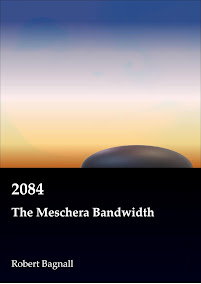
Click on the images or search for these on Amazon.
You're here, so surely you know how to do that?


2084 - The Meschera Bandwidth

2084. The world remains at war.

In the Eurasian desert, twenty-year old Adnan emerges from a coma with memories of a strictly ordered city of steel and glass, and a woman he loved.

The city is the Dome, and the woman... is Adnan's secret to keep.

Adnan learns what the Dome is, and what his role really was within it. He learns why everybody fears the Sickness more than the troopers. And he learns why he is the only one who can stop the war.

Persuaded to re-enter the Dome to implant a virus that will bring the war machine to its knees, the resistance think that Adnan is returning to free the many - but really he wants to free the one.

24 0s & a 2

Twenty-four slipstream stories.  Frequently absurd, often minimifidian, occasionally heroic.

Friday, 17 December 2021

If Aristotle wrote Squid Game

Contains spoilers...

...which is a completely irrelevant warning, because the whole planet has seen Squid Game, apart from us.  Or, more accurately, has seen all of Squid Game, whereas we're only up to episode 6.  And, just to confuse matters further, I'm writing this as though I've only seen the first two, which is when I mentally sketched out my thinking for this post.

Because, much as I've taken to the whole peppermint-accented Grand Guignol since, I was left feeling hugely underwhelmed after the first episode.  In fact, up until halfway through the second episode I was convinced that this may be building up to a textbook example of 'how not to'.

Let's just review the first episode and a half:

Seong Gi-hun is down on his luck, having accumulated enormous debts whilst becoming estranged from his daughter and ex-wife. At a train station, a well-dressed man asks him to play a game for money, then offers an opportunity to play more games with much higher stakes. Gi-hun accepts, is knocked unconscious, and awakens in a dormitory with 455 others, identified only by numbers. It is explained that the players are all in dire financial straits but will be given billions of won in prize money if they can win six games over six days. The first game is a deadly iteration of Red Light, Green Light, where anyone caught moving is shot dead on the spot.

With over half of the players killed in the first game, many survivors demand to be released. Using the game's third clause, they successfully vote to cancel the game and send everyone home, but without any prize money. Back in Seoul, Gi-hun goes to the police, but no one believes him except Detective Hwang Jun-ho, whose brother received the same invitation card and has recently disappeared...

The above is taken from Wikipedia, which fails to mention that when we meet him Seong Gi-hun lives with his ailing mother and thinks nothing of stealing her bank cards to finance his addictions.  This is not a nice person.  This is a person who you would be delighted to see locked up and off the streets.  Yes, he can do that winning baffled look and the more time you spend with the character you forget his lack of moral compass, but repeat after me... this is not a role model.

Years ago, I attended one of John Truby's workshops.  I recall discussing what may lead you to root for a hero, and high up on the list was undeserved misfortune.  Not misfortune, but undeserved misfortune.  That first word was really important.  And this wasn't John Truby's idea, he was just passing down a nugget of wisdom that's been knocking around since Aristotle.  It's innate, hard-wired.  We can't help thinking in these terms.

To save you clicking on that last link, here's the crucial line from the deep thinkers at Tufts University: "The hero must not deserve his misfortune, but he must cause it by making a fatal mistake, an error of judgement, which may well involve some imperfection of character but not such as to make us regard him as 'morally responsible' for the disasters".  Sorry, stealing mum's bank card wasn't a misstep, it was the actions of a character rotten to the core.  Morally responsible for the kimchi he's in?  Absolutely.

But that isn't even my main gripe.  At the risk of sending one of my hobby horses lame through over-exertion, story requires there to be a hero (doesn't need to be singular or even human) trying to achieve something (anything!) who needs to overcome obstacles to get there.  Others will say that there needs to be a personification of those obstacles (an antagonist) and our hero needs to evolve, but they're not necessities.  They'll improve the end product, sure, but you can still have a story without them.

Let's tick them off.  Hero.  Subject to the comments above, check.  Obstacles.  The story is designed around the six couldn't-be-more-obstacle-like-if-you-tried games in six days.  Check.  Achieving something.  Clearing his debt.  Right?

Not so fast.  Clearing a debt, or making money isn't an aim, or at least not an aim that's particularly interesting, story-wise.  Doing something - robbing a bank, closing an impossible deal, driving trucks filled with unstable, leaking nitro-glycerin up a long and rocky mountain road to plug an escalating oil refinery blaze - to make the money, now that's the interesting part.  Not the cash.  What you have to do to get it.  Do you want to see a story about a football manager funding his toddler's obscure treatment by winning the cup or getting sacked?  They both sound dreadful, but the second sounds a whole different level of dreadful.

And what does Seong Gi-hun have to do to win the money?  Not lose.  Not do something.  Avoid an outcome.  It's not even like there was a leaderboard after the first game, it was simply a matter of not failing.  And watching people avoid an outcome is really, really boring.

And whilst it becomes quickly apparent later on that there is an incentive to be the only winner at the end of the race, that isn't how the first episode is set out.  It's a case of you don't need to succeed as long as you don't fail.  There can be as many winners as you like.  In theory, everybody could have won the first game.  So, we have a dislikeable main character trying to avoid, rather than achieve, something, without any sense that the number of winners is in any way rationed.  How did this get green lit?

It's only when Hwang Jun-ho comes on the scene looking for his brother - a positive, definite objective - for a character with undeserved misfortune that I found myself engaged.  It was like a switch had been flicked.  Now I wanted to know what happened next.  But ninety minutes in?  Seriously?  I didn't know we could be so relaxed about story these days.

I'm sure John Truby would have set the whole thing up differently.  Hell, I think Aristotle would have done so too.

#

Click on the images or search for these on Amazon.
You're here, so surely you know how to do that?


2084 - The Meschera Bandwidth

2084. The world remains at war.

In the Eurasian desert, twenty-year old Adnan emerges from a coma with memories of a strictly ordered city of steel and glass, and a woman he loved.

The city is the Dome, and the woman... is Adnan's secret to keep.

Adnan learns what the Dome is, and what his role really was within it. He learns why everybody fears the Sickness more than the troopers. And he learns why he is the only one who can stop the war.

Persuaded to re-enter the Dome to implant a virus that will bring the war machine to its knees, the resistance think that Adnan is returning to free the many - but really he wants to free the one.

24 0s & a 2

Twenty-four slipstream stories.  Frequently absurd, often minimifidian, occasionally heroic.

Sunday, 12 December 2021

A cause for concern

A well worn science fiction trope is humanity stumbling on to a higher intelligence.  By definition, it’s tricky to write, and very often we end up concocting aliens with super-human powers, rather than intelligence that somehow operates on a whole extra dimension.  What would that even look like?  Think if ants were to be able to do sudoku, or a gecko plot a political campaign.  What would a similar leap be for us?

Well, yesterday, I think I may have stumbled on an insight.

I turned from reviewing coverage of my team’s galling 96th minute defeat to a relegation rival to reading that global warming is melting the arctic permafrost, causing it to release carbon dioxide, increasing the rate of global warming and therefore defrosting of the poles, in a spiralling nightmare equivalent, in greenhouse gas emission terms, to dropping another China on to the planet.

Objectively, I knew these issues were of such vastly different scales that no sane and sentient intelligence could react to them the same way.  But I couldn’t help but do exactly that.  It’s hardwired, no doubt down to still, biologically, needing to assume there's a sabre-toothed tiger hiding behind the postbox until disproved.  And, I suspect, it may lead to the ultimate destruction of the species.

A higher intelligence would give each of those two scenarios the weight they deserve, treat them intuitively as vastly, cosmically different.  But not me, not this homo sapien - and, I would suggest, not the vast majority of homo sapiens.

I mentioned it to the good lady wife, who said her main concern was the eczema on her elbow.  ‘Nuff said.

#

Click on the images or search for these on Amazon.
You're here, so surely you know how to do that?


2084 - The Meschera Bandwidth

2084. The world remains at war.

In the Eurasian desert, twenty-year old Adnan emerges from a coma with memories of a strictly ordered city of steel and glass, and a woman he loved.

The city is the Dome, and the woman... is Adnan's secret to keep.

Adnan learns what the Dome is, and what his role really was within it. He learns why everybody fears the Sickness more than the troopers. And he learns why he is the only one who can stop the war.

Persuaded to re-enter the Dome to implant a virus that will bring the war machine to its knees, the resistance think that Adnan is returning to free the many - but really he wants to free the one.

24 0s & a 2

Twenty-four slipstream stories.  Frequently absurd, often minimifidian, occasionally heroic.


Saturday, 20 November 2021

Is it right to have favourites?

No, not amongst your children - what could possibly be wrong with that? - I mean amongst your stories.

I’ve just finished final edits on 'The $100 Fortune', which will appear in Dark Cheer, Cryptids Emerging from Improbable Press next February.  The story of a fortune-telling, time-travelling orang pendek, I think it may be the best thing I’ve written.


Coming back to it some months after last looking at it gave me a perspective I’m rarely allowed once a piece is accepted.  It meant I could read it cold, like a real reader would, which led me to notice things like a change in setting that wasn’t flagged up, hence had failed to move the scenery in the reader’s mind.  It allowed me to tweak elements like that, and elsewhere where I hadn't quite said what I meant or meant what I said, shave a bit more fat off here and there, and so forth.  Recently reading Stephen King’s excellent 'On Writing', whilst telling me little that wasn’t in Ken Rand’s brilliant '10% Solution', reinforced many of those lessons and helped me spot those redundancies.  If the rest of the two volumes is as good as I think my piece is, they should be a cracking read.

#

Click on the images or search for these on Amazon.
You're here, so surely you know how to do that?


2084 - The Meschera Bandwidth

2084. The world remains at war.

In the Eurasian desert, twenty-year old Adnan emerges from a coma with memories of a strictly ordered city of steel and glass, and a woman he loved.

The city is the Dome, and the woman... is Adnan's secret to keep.

Adnan learns what the Dome is, and what his role really was within it. He learns why everybody fears the Sickness more than the troopers. And he learns why he is the only one who can stop the war.

Persuaded to re-enter the Dome to implant a virus that will bring the war machine to its knees, the resistance think that Adnan is returning to free the many - but really he wants to free the one.

24 0s & a 2

Twenty-four slipstream stories.  Frequently absurd, often minimifidian, occasionally heroic.

Wednesday, 3 November 2021

People of Earth, your attention please - read more!

Apparently, it makes you more open-minded, improves thinking skills, and even helps you live longer.  And whilst you're deciding which great work of literature to start on next, perhaps you'd like to give 'General Katutian Surveys her Triumph' published on Martian, the magazine of science fiction drabbles, a go.  It's only a hundred words, so it won't delay you getting to the Kafka or Chekov.


If that's not long enough for you, then there's always 'Karl, I Hope You Don't Read This Letter', on Australia's Etherea Magazine, a bit longer, but still under a thousand words.


Just whilst you're deciding, you understand. And, if you're still uncertain you could just plump for...

#

Click on the images or search for these on Amazon.
You're here, so surely you know how to do that?


2084 - The Meschera Bandwidth

2084. The world remains at war.

In the Eurasian desert, twenty-year old Adnan emerges from a coma with memories of a strictly ordered city of steel and glass, and a woman he loved.

The city is the Dome, and the woman... is Adnan's secret to keep.

Adnan learns what the Dome is, and what his role really was within it. He learns why everybody fears the Sickness more than the troopers. And he learns why he is the only one who can stop the war.

Persuaded to re-enter the Dome to implant a virus that will bring the war machine to its knees, the resistance think that Adnan is returning to free the many - but really he wants to free the one.

24 0s & a 2

Twenty-four slipstream stories.  Frequently absurd, often minimifidian, occasionally heroic.

Monday, 25 October 2021

There can be only one - except for sequels and spin-offs, of course

Something of a family tradition now, Saturday night is popcorn movie night with each of us taking turns to choose.

Recently my choices have been relative clunkers, with Primer too gnomic for the beer-and-pizza vibe, and the well-reviewed Vast of Night turning out to be dreadful - incomprehensible verbiage, insufficient story that stalls on the start line and doesn't even inch forward for twenty-odd minutes, and nobody minding that the switchboard girl saw her duties as optional, as opposed to the traditional radio operator going down with the ship - unless you're on the SS Californian, of course.  Oh, and a long distance call in response to an item on a local radio station, which nobody even comments on.  That's now three and a half hours of my life you own me, Kermode - for that and White Lightnin'.

So, to remind myself what a crowd-pleaser looks like, I re-watched Highlander.

Highlander is a film I don't think I've seen for thirty years plus, and then I only saw it once, twice at a push.  There were vast amounts I’d forgotten, from Celia Imrie as the acidic girlfriend to the fact that most of it takes place in modern-day New York and the Highlands are but secondary backstory.  Actually, I probably would have dredged that last bit up had I thought about it.  But not Celia Imrie.

But what stuck in my mind from my teenage viewing, as much as the accents, is the Highlander rulebook.  Here is a race of immortals born of mortals—or, possibly, individuals who were born mortal who somehow became immortal, if that constitutes a material difference—who are destined to come together at the Gathering to fight until there is only one left.

Why?

The lack of explanation left me puzzled then, and even more puzzled now.  Says who?  Who's making this stuff up? Why does nobody ask why?  Why doesn’t Connor McCloud just laugh.  Even the soldiers roped in to carry out the so-called Captain Kopenick's bank robbery or the volunteers Stanley Milgram asked to turn the voltage up can claim to have been mesmerised by the power of a white coat or uniform. But this just falls into the category of if someone asked you to jump off a cliff, would you do it?

If the other immortals had managed to take out the Kurgan early doors - and remember, the only excuse for Ramirez giving somebody he’ll have to fight and kill if he is to be ‘the One’ a heads-up is that it’s to his potential advantage, that immortals have some notion of alliance - would they have circled each other with their claymores and broadswords until somebody wondered why:

“Because there can be only One!”

“Says who?”

“Yeah.  Says who?  We’ve never had an issue with each other up to now.”

“Why don’t we get a camper van, you know, travel around and solve mysteries.”

“I thought maybe a deli serving coffee and panini.  Or a little restaurant.  Ethnic.” 

There are plenty of shit rulebooks in storytelling.  It’s just that most attempt some kind of disguise. But not Highlander.  It just blurts it out, in the Scottish tones of Sean Connery’s Egyptian immortal.  It’s the fore-knowledge that gets me.  Immortals fight to the last man standing, not because only one can claim sole inheritance or kingship, or the others are a mortal threat, or reducing their number to one somehow enables some greater good, but because it's what they do.  Ice cream melts, seagulls shit on my newly cleaned car, and immortals fight to the last.  It's just how the world is.  Roll with it.

Maybe there is some priest class with a convincing motivating backstory (I haven’t seen any of the sequels, prequels or spin-offs; I’m dealing with the original alone) and maybe Connor McLeod is somehow late to the party and just getting what’s necessary. But if McLeod is late to the party, who says more immortals can't be born or found?  Maybe you're the One for a bit, but there’s a new immortal just born in Outer Mongolia.  How does no longer being the One feel?  What difference does it make?  I’m guessing none whatsoever.

There’s something unusual, possibly unique, story-wise, going on in Highlander and I wonder how many people have noticed.  I looked it up on TVTropes - one of my favourite websites, by the way - and there isn't a sniff of recognition.  They can't have not noticed?  Can they?  My guess is it's almost too large to credit.

It’s the ultimate what’s my motivation?  The pay-check?  It’s in the script?  Did the writers simply spend a morning scratching their arses as they tried and failed to finagle a convincing explanation as to why the world was this way, only to declare what’s it matter? let’s go to lunch?

Which all leaves me wondering, is Highlander the ultimate bad writing metaphor?  What motivates the characters?  Answer: absolutely nothing; they’re just following a script.  They say things and do things because that’s what the little black squiggles on the white page tell them to do.  And the writers have decided they must come together and fight to the death for no better of more meaningful a reason than it’s cool.

#

Click on the images or search for these on Amazon.
You're here, so surely you know how to do that?


2084 - The Meschera Bandwidth

2084. The world remains at war.

In the Eurasian desert, twenty-year old Adnan emerges from a coma with memories of a strictly ordered city of steel and glass, and a woman he loved.

The city is the Dome, and the woman... is Adnan's secret to keep.

Adnan learns what the Dome is, and what his role really was within it. He learns why everybody fears the Sickness more than the troopers. And he learns why he is the only one who can stop the war.

Persuaded to re-enter the Dome to implant a virus that will bring the war machine to its knees, the resistance think that Adnan is returning to free the many - but really he wants to free the one.

24 0s & a 2

Twenty-four slipstream stories.  Frequently absurd, often minimifidian, occasionally heroic.

Saturday, 2 October 2021

Never finished finishing school

Not doing the last button up on a waistcoat.  Never drinking when it's you being toasted.  Not acting like an American tourist.  Etiquette is difficult, isn't it?

I've blogged previously about the etiquette of simultaneous submissions.  Re-reading the 45-year old me, I clearly still had some sense of honour left as I meant what I said about observing publishers' rules.  Standards have slipped - or my approach has become more pragmatic, depending on your point of view - since then.  Too many submissions either not responded to or getting stuck for too long.  Too many publishers offering next to nothing but still wanting exclusivity without commitment.  I've become more militant in my view that 'no sim subs' is an unreasonable rule.  Christ, even the New Yorker allows sim subs.

So, I now divide the world into those whose 'no sim subs' rule I observe - pro and semi-pro markets; those who respond in a reasonable timescale (say, a month); those who I know are business-like - and the rest.  And with the rest, I'm prepared for the embarrassment of having to withdraw (my submission) before you finish (my submission), leaving you confused as to how there was ever another suitor.  I've pretty much adopted that strategy since writing that earlier blog posting, which had the effect of crystallising my thinking.  And you know what, I've never been left embarrassed.

But I have encountered a variation on the problem: how quickly to withdraw a story from markets which allow sim subs when that story has been accepted elsewhere.

My story Arlecchino is forthcoming in 'The Dead Inside' from Dark Dispatch.  Obviously delighted that they've taken this little clown-related nugget - go buy it when it's out.  But when the email arrived about a month ago, the story was still with two other publishers, including one that would pay more.  I've had too many acceptances turn out to have all the substance of a mirage, including two with the same publisher this year.  An acceptance isn't the same as seeing it in print, or getting paid.  Reading submissions and sending out acceptance emails is a lot easier than getting a publication together, and too often events get in the way or the process gets too difficult or costly for amateur outfits.  Counting chickens, and all that. 

Of course, I withdrew the story the same morning from the other venues.  But unthinkingly, the compliant actions of my forelock-tugging side.  As soon as I pressed send I wondered whether I should have waited for the contract, even waited for payment or a point of no return.  (I've even been farcically over-eager previously: I misread an email from newmthys.com telling me that a story had been accepted for further consideration and withdrew it from other markets - it's still being chewed over, and I'll feel a fool if it comes back to me).

Perhaps next time I'm faced with the same situation I'll find that writing this post has, again, crystallised my thinking... and I'll adopt a less naïve strategy.

#

Click on the images or search for these on Amazon.
You're here, so surely you know how to do that?


2084 - The Meschera Bandwidth

2084. The world remains at war.

In the Eurasian desert, twenty-year old Adnan emerges from a coma with memories of a strictly ordered city of steel and glass, and a woman he loved.

The city is the Dome, and the woman... is Adnan's secret to keep.

Adnan learns what the Dome is, and what his role really was within it. He learns why everybody fears the Sickness more than the troopers. And he learns why he is the only one who can stop the war.

Persuaded to re-enter the Dome to implant a virus that will bring the war machine to its knees, the resistance think that Adnan is returning to free the many - but really he wants to free the one.

24 0s & a 2

Twenty-four slipstream stories.  Frequently absurd, often minimifidian, occasionally heroic.