Thursday, 2 April 2020

Some good news, some bad news, and some old news

The good news is that Abyss and Apex have published my story 'May Nothing but Happiness Come Through Your Door'.  It's a story of how the world ends up a better place after a pandemic (of sorts) is started by a terrorist (of sorts).  Sort of prescient - although don't read too much into it as it was sold back in 2018 and has been queuing patiently ever since.  So British.

The bad news isn't for you or me.  It's for Keaton, the private detective at the heart of my story 'The Hypnotist', now available at Hybrid Fiction.  Diligence over the details leads to an outcome that even a fortune teller would be hard pressed to foresee.


Please buy it, not for my sake (although these stories are two of my favourites), but to support a new writing market in what may well turn out to be straitened times for the industry.

And, as if to doubly disprove the near impossibility of writing positive science fiction, those lovely people at Third Flatiron have taken a story of mine, 'The Thirteenth Floor', for Gotta Wear Eclipse Glasses.  More on that when it hits the digital shelves.

And the old news?  Well, my novel, 2084, is still available...
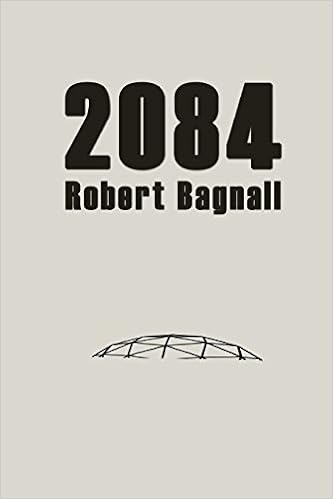


Follow these links to buy 2084 from Amazon.com, .co.uk, .in or direct from Double Dragon


Saturday, 21 March 2020

Wishing you all an uneventful apocalypse

At some point over the last couple of weeks I’ve stopped merely writing science fiction stories and started living in one. The Lord Chamberlain has shut the bawdy houses and we’re all meant to keep at least six feet apart, like magnets of the same polarity, if we want to avoid ending up six feet under.

Here in the UK, like many nations, there has been a swift ratcheting up of preventative measures.  At the start of last week my 16-year old was revising for exams; he’s now had a muted celebration for the end of the academic year.  My 14-year old left school on Tuesday lunchtime for the orthodontist, fully expecting to show off a mouthful of teeth devoid of braces the next day.  She never went back, and nobody knows when she will.

We’re told to hope for 20,000 deaths but fear at least ten times that.  My mind keeps flipping back to the fact that the infection rate is somewhere around 0.005%; in my area of Torbay last time I looked deaths and infections can still be counted on two hands.  But is that because of the measures we’re taking, or evidence that those measures are disproportionate?  I can’t help thinking that there appears to be some political one-upmanship internationally, no leader wishing to be seen to advocate anything more lax than the nation next door.  Even if that mitigation is belt, braces and then some.

Seasonal flu takes an average of around 17,000 a year in England.  That’s an average, of course; last year’s toll was more like 1700, so mere reversion to the mean suggests 20,000 this year could be expected anyway.  And those figures quoted above include some who would have died anyway.  You can’t die twice.  If Coronavirus is twice as scary as seasonal flu, then do twice as much as you did to ward off that (what’s that I hear? nothing, you say? never heard it mentioned in the news?).  Quarantine the sickly and isolate the vulnerable, sure, but can’t life go on for the rest of us?  No?  Really?  I can’t help thinking that we’re acting like an immortal species that has discovered the possibility of death for the first time...

But rules are rules, and we’re watching more tellybox than usual.  On the subject of which, I was slightly shaken by the claim made in Kevin McCloud’s Rough Guide to the Future (doesn’t pre-Covid 19 TV seem so... quaint) that we’re heading for 10 billion people on the planet within my lifetime.  That, to me, is scarier than the coronavirus.  The more rationally callous part of my brain can’t help thinking that the best thing for the human race in the long term is a bloody good prune.  Indeed, HM the Q has urged us to come together for the common good, which I interpret as meaning wiping out the last of the generation that remembers the war.  I may have misunderstood.  I’d rather it were by lowering the birth rate rather than upping departures, but China’s bio-weapon development overspill (sorry, sorry... I meant Mother Nature) may have other, more efficient and effective ideas.

As for the future, who knows?  The optimist in me says the so-called Spanish Flu was followed by the Jazz Age and the Roaring Twenties rather than a new Dark Age.  The pessimist says than mankind may no longer be the planet’s apex predator.  Whichever it is, I wish you well over the coming weeks and months.

Sunday, 1 March 2020

The Parmesan of misery

A rant.  I'm sorry.

Those very nice folks at Third Flatiron are currently throwing their digital doors open to submissions to their next anthology.  They've taken a story of mine before and have been utterly professional in their dealings.  So what could I possibly have to complain about?

Well, the pitch for Gotta Wear Eclipse Glasses is positive sci-fi, "The future we all want... climate mitigation and adaptation, new opportunities to boldly go where none have gone before".

And that's where I have a problem.  I keep a spreadsheet to record and manage my stories, alongside and in parallel with my account on The Submissions Grinder.  Old school, but it works for me.  Scanning some of my sold stories, they can be pitched roughly as follows:
  • a grumpy magician sends an annoying artist into a parallel dimension to scream into the void for eternity
  • an android inadvertently causes its own destruction, thus finally understanding the meaning of irony
  • a pensioner causes offence by mistaking a well-wisher for an app
  • a paranoid rejects society, causing the death of Alan Alda
  • a gullible drone on Ernst Stavro Bloefeld's floating island is conned out of an inheritance
  • unbeknownst to each other, a couple have themselves replaced by androids to escape their failing marriage
  • an inventor pitches a water additive, only to find out that the water company has been using something far more pernicious for the last fifty years
  • an idiot second husband turns tries to hide his idiocy, turning over evidence of how his beloved came to be available in the first place
Do I need to go on?  There's nothing positive in any of these.  There's death.  There's a couple of fates worse than death.  There's being left feeling foolish and bereft, a couple of times being left foolish and bereft without realising, which seems somehow worse - and makes a nice story arc harder, to boot.

Why do I do it to myself?

I think the simple answer is I don't know any other way.  If I wrote a story where everyone ended up grinning, there’d have to be some sinister catch.  I’m not sure I want to write, read or watch something that tells me everything is happy without some sort of unintended consequence lurking under the floorboards.  Sci-fi isn't made for happy endings, in the same way that chocolate sauce isn't made for meatballs and linguini.  Give me the Parmesan of misery any time.  At least it goes.

Saturday, 22 February 2020

Camponotus Vampiricus

A little something, snuck out under the radar on Valentine's Day, so I didn't even notice it.  Like an ant in the sugar bowl... 

Sunday, 2 February 2020

The Watcher needs a rewrite

"This was a good piece.  Given more room and budget I’d have bought it."

I woke up to this response to a story submission this weekend.  I get feedback along these lines quite often, a sense that my stories are falling just short of the transom.  I'm sure editors will say that they get many, many more stories that tick all the boxes than they have pages, webspace or dollars to accommodate.  

So I've decided to try to absorb and actively apply some of the lessons of writing out there in an effort to give my stories just that little bit heft in order to achieve escape velocity.  Not just to keep on keeping on, but not to keep on making the same mistakes over and over.  Trouble is, I'm a mule-headed student who often thinks they know best...

I haven't the faintest who T Gene Davis is, but he's posted some excellent lessons on the art of the speculative short story which, he claims, will put you ahead of 99% of the competition:


Meanwhile, Eschler Editing offers three rookie errors: lack of a hook (essentially, the brilliant opening piece above); low stakes; and an abrupt ending

So, I have decided to keep these credos front and centre in the writing of my latest piece.

Cutting out passives

I don't think I have too much of an issue here: I naturally gravitate towards 'the cat sat on the mat' rather than 'the mat was being sat on by the cat'.  In this story I do have a quandary over "There is a moment of resolution in her face" ("Her face resolved itself after a moment"?) before deciding the whole sentence in which appears can go.

Backstory
T Gene suggests searching for 'had' and cutting out what's happened in the past.  Again, I think I'm generally adept at avoiding 'I had been born in Frankfurt thirty-seven years before', etc., and laying a trail of allusion in its place, although I have a niggle with this one in that sometimes you can give context in a line whereas spelling it out may stop the mystery tour for longer than you want.

I'm probably breaking the rules, but I kept in "Vanessa has printed off a reply to the email, the email I asked her to send.  She was reluctant and, I must confess, I feel I somewhat bullied her into it.  But her face is bright with the news."  Should I have shown John bullying Vanessa into composing the message, searching for who to send it to, pressing 'send'?  I think those paragraphs would derail the tale more.  

Know your characters
This is one I don't think I'm always that great at.  I have no repeating characters; every story starts with a fresh team.  I'd be awful at crime fiction.  I tend to know my characters as much as you would a new colleague after a day's work - the bare biographical facts, plus joining the dots between various statements and actions.  My technique is as much to surprise myself with plausible inconsistencies in how they act and react, another facet on display each time.  It feigns complexity and nuance.  

In this story, one character is an enigma, and the story is about her enigmatic status.  Is she an alien?  Is she even real?  Time does not apply to her as it does to us.  Suggestions are made of a criminal, even slightly perverted past for the other.  I don't know the details.  I'm not sure I want to know.

Brilliant title
It's called 'The Watcher'.  Hmmm.  Well, the digestive biscuit is doing just fine, thanks.  And I won't give you the opening sentences, but I think they're reasonably hooky.

Low stakes
Again, I'm not sure I score well against this, or even want to score well.  It seems a very... American requirement.  British life is more about quiet desperation, and it certainly shows in my fiction.  In this tale, John, whose story it is (actually, I'd put that ahead of any of T Gene's points - know whose story it is) is seeking clarity, understanding.  That is what is at stake for him.  Not everything has to be about saving humanity.

Abrupt ending
Again, I have form.  I've already commented on this blog that my stories, even to me, feel like act ones.  My good friend Richard Earl, a Big Finish Doctor Who and Sherlock Holmes actor, said of The Root Canals of Mars that it read like page one of a Netflix pitch.  That email, that John persuades Vanessa to send, resolves the story.  There's less than 400 words of a 2500 word story after John decides that will settle matters.  Too short, too abrupt...

Actually... I have a sudden sense of clarity.  The ending is all wrong.  John, across a prison table, is shown the response from a Princeton professor confirming that his hypothesis is correct.  John is proved right, but he has limited agency: he's in prison for no vital reason, his hands metaphorically tied.  Others make the final connection for him.  I'm having flashbacks to Philip Roth's Operation Shylock and Donna Tartt's The Goldfinch, and what made me so furious about them.  In the first Roth gets out of writing an act three by claiming the CIA (or somebody, I forget) has made him redact it (!).  In the latter, subsidiary characters resolve the story off-screen.  I've made the same error - I need John to man up and solve the mystery himself.

The Watcher needs a rewrite: an act three with more agency for the main character and more to play for.  This is the mistake that I keep on making.  And to think this would have otherwise gone off to Clarkesworld tomorrow...

I think this may count as a blog posting with a story arc.

Sunday, 26 January 2020

Buy signals & bye bye signals

In my look back over 2019 I commented that I had ended up with an unusual number of submissions marked as 'Pending, Held for Consideration' on the Grinder.

Well, how those numbers have fallen.

Some of them I had limited faith in.  Two still cling on - no names, no pack drill - although they fall very much into the category of 'didn't make the cut for this issue, but if there's ever a volume two maybe we'll consider it'.  I doubt there ever will be a volume two, and I've been provided with no certainty even if there is, but their entries remain officially open for the moment. 

Another two submissions were of the same story to the same publisher: Crone Girl Press.  One clearly made it over some hurdles for 'Coppice and Brake' but fell before the finish, the other (which CGP asked, unbidden, to hold for a second volume of 'Stories We Tell After Midnight')... well, maybe there won't be a second volume, or maybe it got trampled on by a weight of better material.  Guess I'll never know.

Also changed to 'Rejection- form', a reprint of My Avatar has an Avatar, which Frozen Wavelets liked, just not enough.  A common enough response.

But, the sixth... well, delighted to say that Daily Science Fiction have taken my tale of an android finding out the meaning of irony the hard way, 'Audit's Abacus'.  First sale of 2020, and it's not the only buy signal that I've had so far - but I'm hardly going to jinx matters by telling you, am I?

Wednesday, 1 January 2020

End of term report

Another year, another glance over my shoulder at the trail of chaos and confusion in my wake.

Last year, I didn't set myself a target of a short story submission a day, so there's no shame in only managing 206 in 2019.  As regards results, the year saw seven acceptances, 162 form rejections, and 29 with something nice to say alongside a firm 'no'.  Twenty-eight remain out in the ether, a herd of editorial Schrodinger's Cats, with an unusually high proportion (six) of 'held pending consideration', although I doubt more than a couple will bear fruit.

So, on the face of it, a good year, and the primary target of three pieces sold achieved in spades.  But, when you consider what those pieces were and where they went:

Two drabbles, three pieces around 1000 words, and only two proper short stories.  All new material, granted, but that's still barely 11,000 words in a year.  Hardly Proust.  And, having written ten stories in the year, I'm still selling them slower than I'm writing them.

Plus, when looked at through the prism of my acknowledged need to get published in more professional, higher paying, greater circulating, more prestigious places - with all respect to the semi-pro venues listed here - it's not been a roaring success.

As part of that strategy, feeling that I at least had a sense of what the Writers of the Future were after, I went all out after that glittering prize, garnering two silver honourables, and two unplaced.  One of the latter pair really stuck in the craw, as I felt it architect-designed for them, but them's the breaks...  

In addition to those above, 'The Loimaa Protocol', sold in 2018, appeared back in the Spring.  And 'May Nothing But Happiness Come Through Your Door', also sold in 2018, remains slated to appear on Abyss and Apex sometime this year - and caused a minor ruffle when they chased for a signed contract, with ominous tones of 'if we don't hear from you rapidly', a year after I'd actually returned the paperwork.

Three other targets: to sell a novel, write a novel, and publish a novel.  In roughly that non-intuitive order.  Might as well sell what I've already written whilst writing more.  Right?

Less said the better on all fronts.  Irons remain in the fire on my YA Harry Potter-meets-Doctor Who novel, which I just want someone to love as much as I do, but that hasn't shown any signs of life in a while.  It remains out with a small number of agents and publishers - here's hoping that somebody lifted it off the slush pile whilst in a good mood this Yuletide.

As for my dark sci-fi thriller 'Toefoot', it's drifted along from 18,800 words to 33,000 words.  I'm in that long dark tunnel known as act two with little sign of any light at the end.  Ideas for short stories are too frequent and too enticing, and I keep reverting to the short form.  That or working for money, which is also a constant fly in my ointment.

And, as for taking the easy way out and publishing direct to Kindle, I'm still clinging to the hope that somehow a proper imprint will come along and save me from being my own publisher.

I can dream, can't I?  It's that time of year.